Configure current category enabled and blocked lists plus category max-stake and minimum-confidence overrides for transparent Polymarket review context.
August 3, 2026 · 4 min read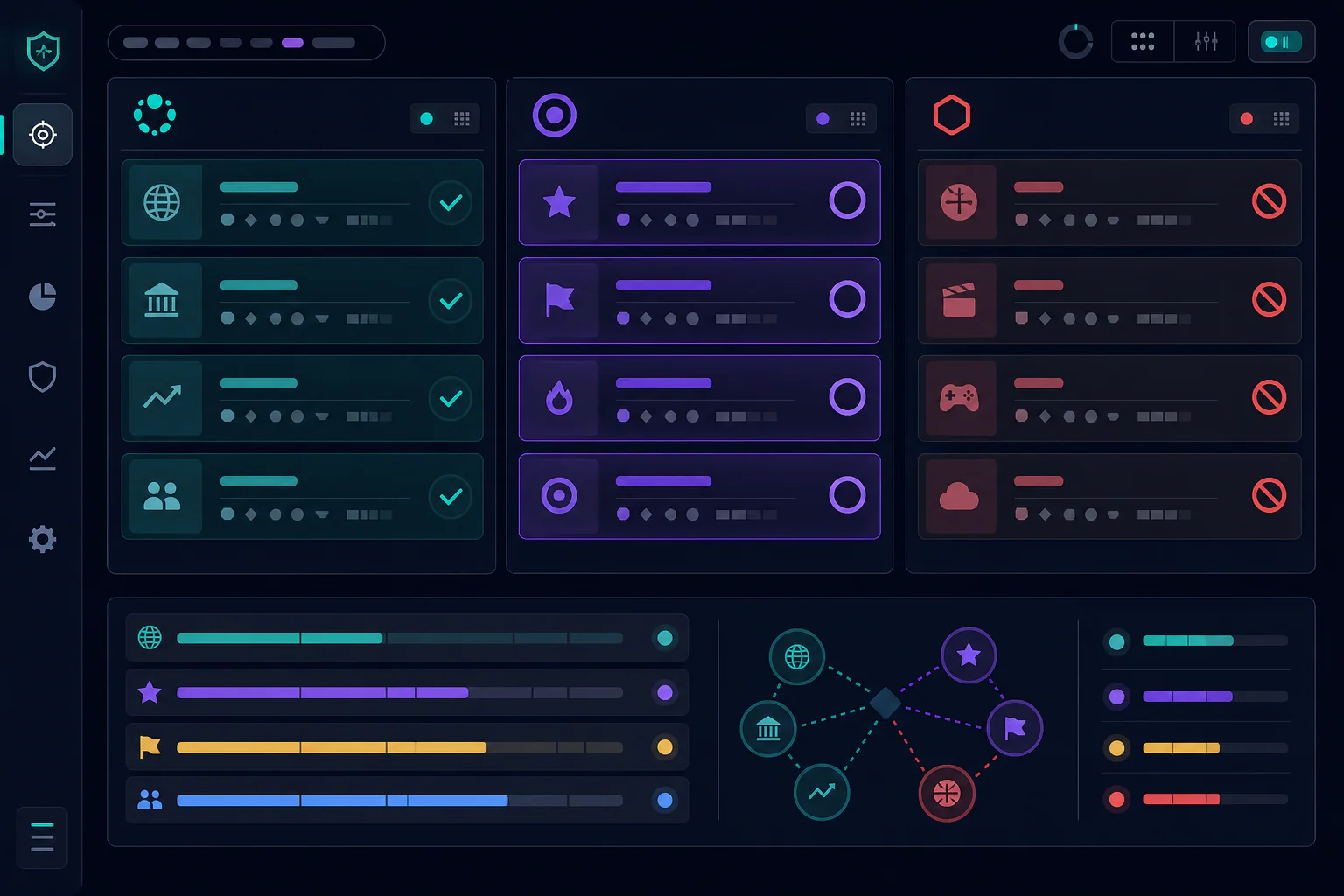
TEMIRIN stores enabledCategories and blockedCategories as workspace policy context. An enabled category remains inside the configured review mandate, while a blocked category produces a visible policy reason. The settings apply to category values already present on configured watchlist records.
Keep category names stable and understandable. When a label changes, record the policy edit prospectively instead of silently rewriting earlier decisions. Users should still inspect the exact market wording and resolution conditions because a category label does not determine whether an idea is correct or suitable.
A category can carry a maximum-stake override and a minimum-confidence override. These values provide visible review context for records in that category. Show the applicable workspace default and override so a user can understand why the category differs.
Describe the fields as explicit category policy values used during review, and preserve the applicable category, override, reason, and policy version with the record.
Category policy applies the configured category values already present on watchlist-derived records. Evidence links require a supported explicit market identifier, and opportunity records come from markets already configured in the workspace watchlist.
Provider-configured Telegram or Slack delivery follows the current alert workflow, while category policy stays on the protected record and the authenticated app remains the source of truth for review state.
The broader current policy surface stores a workspace stake cap, source settings, confidence settings, free-capital percentage, price-move guard, and kill switch. The decision endpoint enforces the price-move guard, and the kill switch affects opportunity eligibility.
Paper orders separately enforce plan-scoped per-order and rolling twenty-four-hour notional limits, per-market exposure, and portfolio concentration. Category settings can be shown beside those results, but they should retain their exact policy and paper-check labels.
Test an enabled category, a blocked category, a category with a narrower maximum-stake override, and one with a minimum-confidence override. Confirm that each record shows the category value, applicable setting, policy version, and understandable reason.
Then change one category setting in a test workspace and verify that earlier records retain their historical context while later records use the new value. Review SEO metadata, alerts, exports, and help text for the same current-only language.
A disciplined category policy makes enabled, blocked, maximum-stake override, and minimum-confidence override states easier to understand.
For a public-copy check, compare the category policy page, one watchlist-derived record, an in-app decision, a paper-order block, and an export. Each surface should use the same enabled, blocked, maximum-stake override, and minimum-confidence override terms. Each should show the configured category state, applicable override, policy version, paper-order context, and explicit evidence-market identifier. Record any mismatched label as a product issue and correct it prospectively without rewriting the earlier audit record.
When category data is missing or unfamiliar, show an explicit unknown state and ask the user to inspect the record. Do not assign a convenient category automatically merely to make a policy result look complete. A deliberate correction with an actor and timestamp is easier to audit than a silent label change. The same principle applies to overrides: when a category override is absent, show the stored workspace policy value used by the current evaluation. Reviewers can explain exceptional judgment in a decision note while the stored category policy remains unchanged.
Select one enabled category, one blocked category, and one category with both maximum-stake and minimum-confidence overrides. Trace the evaluated value and reason from the policy editor to a watchlist record, an authenticated decision, a paper-order response, a journal note, and an export row. Keep the market identifier and policy version visible throughout. This compact reconciliation catches label drift while preserving the exact state that governed each review.
The configured category state should be evaluated against the opportunity record and shown explicitly. A blocked category stops the paper-review path, while an enabled state allows the remaining checks to continue.
They appear as current policy inputs for the applicable category and are evaluated beside the proposed paper notional and confidence context. The record should identify the values used.
Category settings can change over time. Capturing the evaluated state, override values, timestamp, and result lets a reviewer explain an earlier decision without applying today's settings retroactively.

