A practical guide to a current Polymarket paper-order workflow in TEMIRIN using configured records, explicit market identity, current controls, and human review.
August 3, 2026 · 6 min read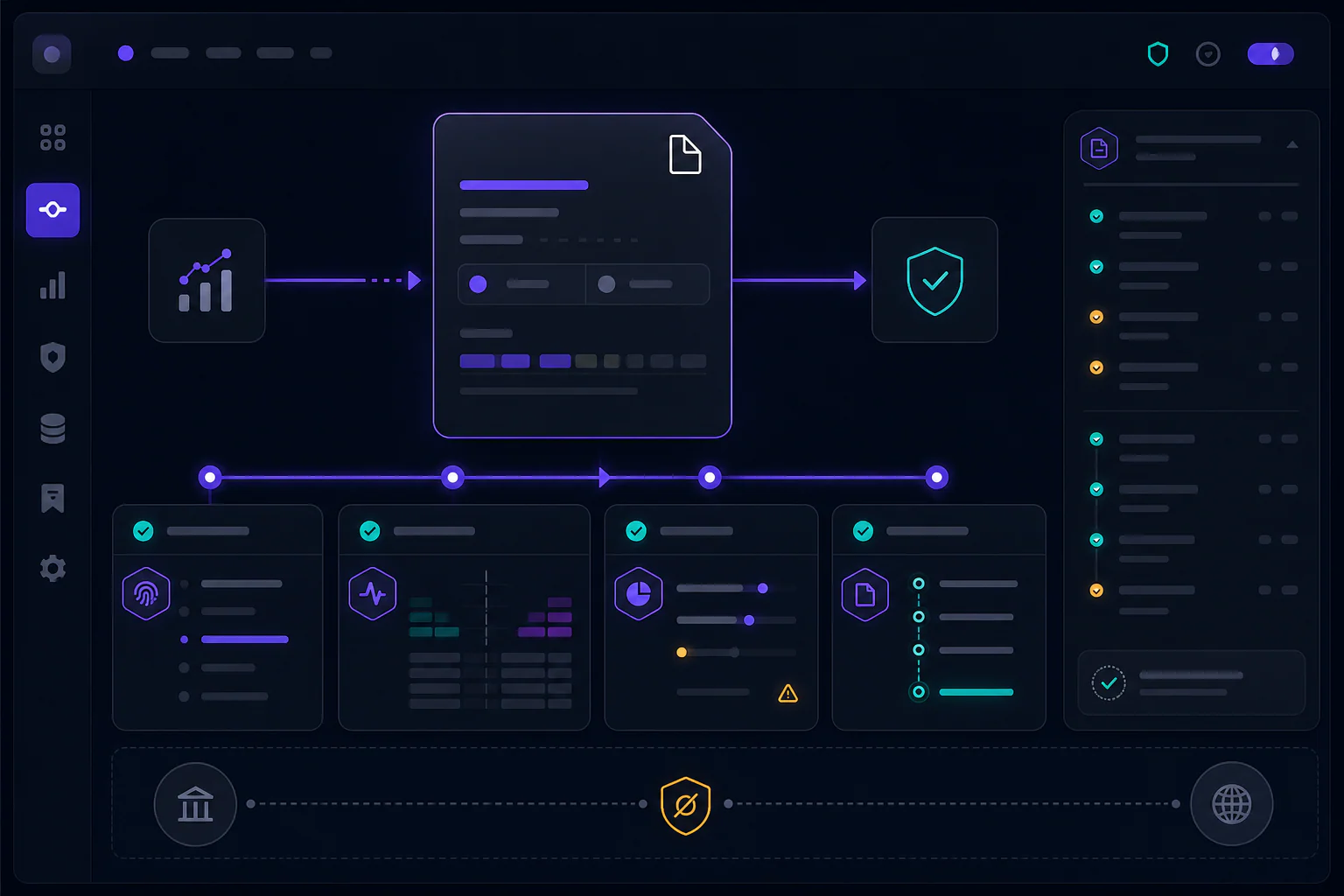
A TEMIRIN paper order is a user-created simulation tied to a known Polymarket market. Before entering a price or notional, verify the public market ID, exact question, outcome side, closing condition, and resolution source. Similar titles can hide different dates, thresholds, or jurisdictions, and complementary outcome prices can invert the intended view. Stable identity ensures that the evidence, trigger reference, policy checks, paper ledger, and journal all describe the same contract.
The market enters the workflow through the configured workspace watchlist. TEMIRIN organizes known markets rather than promising complete venue coverage. If a contract is absent, a user decides whether to add it through the normal configuration path. Historical opportunity and paper records should retain the identifier they used even if the watchlist changes later. This preservation lets another reviewer reconstruct the original simulation without assuming that the current watchlist was identical.
Use a clear paper-only label on the entry form, ledger, analytics, and export. The record does not represent a Polymarket order, reserved quote, wallet movement, or fill. Real transactions remain at the venue under the user’s control. Repeating this boundary across surfaces prevents a successful simulation check or favorable paper mark from being mistaken for external activity.
Open the watchlist-derived opportunity and inspect stored evidence carrying its supported explicit market identifier. Each item should show publisher or provider, canonical URL or reference, observed time, supplied publication or event time when present, and safe processing state. Configured RSS and web records may be canonicalized and deduplicated; provider-configured Telegram and X readers retain their own references. The reviewer still opens the source and judges its relevance to the contract.
TEMIRIN preserves the first observed market price as the opportunity trigger reference. Later synchronization can show current price with a separate timestamp without overwriting that value. Compare both before entering a paper price. The trigger is historical context, not a reserved entry. A substantial difference may prompt renewed evidence review, especially when the authenticated price-move guard blocks a decision under changed conditions.
Record the thesis, uncertainty, linked evidence, and reason for continuing in an attributable journal note. If source material is preliminary, corrected, duplicated, or incomplete, say so. A deterministic brief can organize stored fields but does not replace the reviewer’s judgment. Paper practice is most useful when it preserves the information limitations present at the time instead of adding a confident explanation after the market moves.
The user enters the paper outcome side, price, and notional. These values should reflect the simulation the user wants to record, with units and price scale clearly labeled. TEMIRIN does not choose the amount. If a reviewer copies a public quote, record whether it was bid, ask, midpoint, or another displayed field and preserve its observation time. This prevents a later analyst from treating an ambiguous headline probability as the simulated entry assumption.
Inspect public spread and visible depth when available. A midpoint inside a wide spread may not be attainable, and quantity displayed at one level may disappear. Those fields provide research context rather than a fill model. The paper ledger should not claim that the entered amount was available at the chosen price. If the team makes a manual assumption about book conditions, keep it in the note so it remains separate from server-enforced risk checks.
Do not copy a paper entry from another contract merely because the questions look alike. Verify the exact outcome and use the current record’s timestamps. If a required field is unavailable, leave the simulation incomplete or explain the assumption rather than filling a convenient default. A smaller set of well-specified paper records gives more reliable review data than a larger ledger containing uncertain market identity or copied prices.
Before saving the paper order, the server checks per-order notional, rolling twenty-four-hour notional, per-market exposure, and portfolio concentration. Preserve each pass or block reason with the record. Current workspace policy may also show a stake cap, source and category enabled or blocked states, applicable maximum-stake overrides, free-capital percentage, price-move guard, and kill switch. Together these fields explain the current boundary without making the paper decision for the user.
A passing result means the user-entered simulation fits the implemented checks at that moment. It does not establish market liquidity, financial suitability, wallet availability, or an outside fill. A blocked result is useful data and should remain in analytics. If the team changes a policy value later, apply the new setting prospectively while preserving the earlier response. Historical checks are meaningful only when their original context remains visible.
An in-app approve or reject action is an authenticated decision record, while the paper order is a separate user action. Neither one should be inferred from the other. Configured email, Telegram, Slack, and outbound webhook alerts add transport history in their delivery ledger, with manual retry available for failed attempts. Message success does not create a decision or paper record. This separation helps support identify whether a problem concerns review, simulation, or notification delivery.
A configured public wallet supplies read-only snapshots, positions, PnL context, and concentration context. It can help a reviewer understand visible external exposure, but a paper order must not alter those values. Conversely, an observed wallet change should not be attributed to the simulation. Keep address observation time, paper creation time, and any in-app decision time separately labeled. TEMIRIN never requires wallet-control credentials for research or paper practice.
Later market observations can support paper mark-to-market, with the observation time and valuation assumption visible. Compare the paper entry with its own current mark and, separately, with the opportunity trigger reference. Neither is realized wallet PnL. Spread, depth, unavailable quotes, and unresolved markets should remain visible caveats. A paper result is an analytical record built from a simulation, not evidence that the same trade could have occurred externally.
Use journal analytics and export across accepted, rejected, blocked, unfavorable, favorable, and no-paper cases. Report sample size, missing fields, market identity, entry assumptions, and time range. Avoid selecting only records with attractive marks. A balanced sample can reveal source gaps, delayed review, repeated price-move blocks, or inconsistent paper assumptions while keeping the conclusion limited to the workspace process.
Close the review by appending a lesson rather than changing the original thesis or entry. Improvements may include clearer market checks, stronger source ownership, better price-field labels, or a revised manual checklist. TEMIRIN supports reproducible paper research and audit history; users remain responsible for evidence verification, eligibility, capital, risk tolerance, and every real Polymarket transaction.
For team handoffs, include the paper ID, exact outcome, entry assumption, latest mark time, open uncertainty, and journal link. The next reviewer should reopen the record before adding a mark or lesson. This keeps paper history attributable when responsibility changes and prevents a summary message from replacing the stored simulation context.
An authenticated user enters the market side, paper price, and notional. The workspace does not choose those values.
Current checks cover per-order notional, rolling twenty-four-hour notional, per-market exposure, and portfolio concentration, alongside applicable workspace policy state.
No. It only means the simulation passed the implemented workspace controls. Public spread, depth, timing, and venue conditions remain separate.
No. Alerts deliver review context. A user creates the paper record separately inside the authenticated workspace.
Use clearly timestamped marks, explicit assumptions, balanced samples, missing-data labels, and separate comparisons for trigger references and public-wallet observations.

