A practical guide to a current Polymarket research dashboard in TEMIRIN using configured records, explicit market identity, current controls, and human review.
July 14, 2026 · 6 min read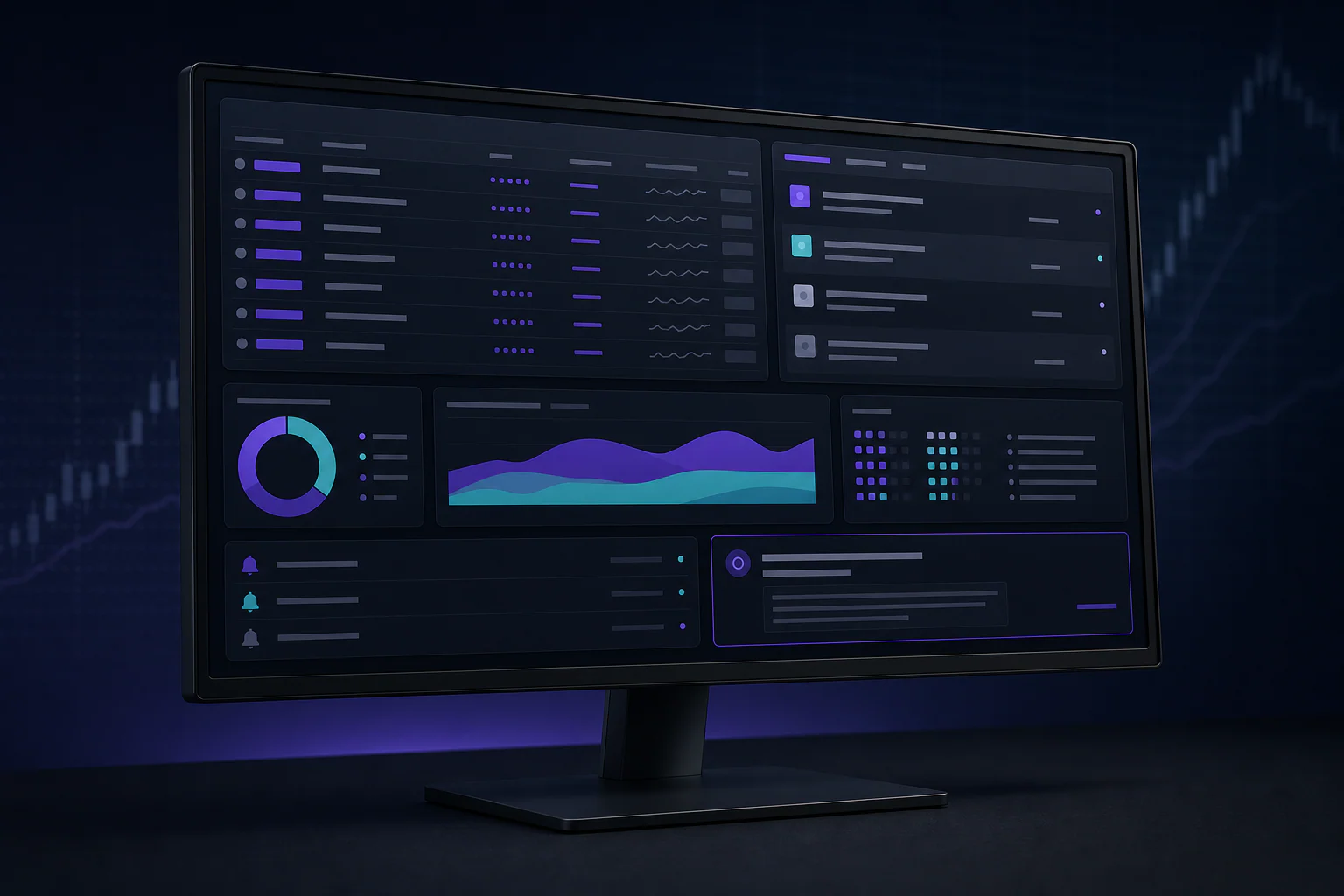
A useful Polymarket research dashboard should answer a small set of concrete questions immediately: which configured sources produced new records, which watched markets have reviewable context, when prices were observed, which policy state applies, whether alerts reached their destinations, and what decisions or paper simulations were recorded. It is an operating workspace built around traceable records. Clear boundaries make each panel easier to trust and reduce the temptation to treat visual density as analytical certainty.
Organize the page in the order a reviewer works. Source health and new evidence come first, followed by watchlist-derived market records, timestamped public market data, policy and read-only portfolio context, alert operations, then decisions and journals. Preserve stable identifiers across panels so a user can open the underlying record rather than relying on a summary card. A headline metric without a traceable source should be treated as incomplete, even if it looks persuasive.
The source panel should identify configured RSS and HTTPS web readers, their latest stored records, canonical references, observation times, deduplication state, and visible failures. Where provider connections exist, Telegram and X readers can show source events with their own references. A quiet source and a failed collection job are not the same state. Displaying the distinction helps a reviewer decide whether no news was published or the workspace could not obtain it.
Outbound delivery belongs in another panel. Configured email, Telegram, Slack, and webhook destinations have attempt records, success or failure status, and manual retry controls. Webhook is delivery only, not inbound evidence. A successful attempt cannot approve, reject, acknowledge, or create a paper order. Keeping source ingestion and notification transport apart prevents a healthy channel from hiding missing evidence and prevents a source failure from being blamed on an external destination.
Every market card should begin with a configured watchlist market ID, exact question, selected outcome, closing condition, and resolution source. TEMIRIN does not scan all Polymarket contracts or infer which markets relate to a source. Stored evidence appears beside the card only through a supported explicit market identifier. This means the dashboard can explain why a record is present, while unlinked evidence remains available in its source view rather than being assigned through thematic guesswork.
Display evidence provenance in a drawer or adjacent list: publisher or provider, canonical URL or reference, observed time, supplied publication or event time where available, and safe processing state. A deterministic brief may arrange these fields, but the reviewer opens the original material and writes any interpretation. Different sources can repeat one origin, address different periods, or revise earlier claims, so the reviewer records those distinctions in attributable notes.
The market card can preserve its first-recorded trigger price and show a later current price with a separate observation time. Public bid, ask, spread, and visible depth add book context when available. Label each value precisely; a midpoint is not a guaranteed quote, and displayed depth can change. The dashboard records these public observations with their market identity and timestamp for human review.
A configured public wallet can provide read-only snapshots, positions, PnL context, and concentration context. Keep snapshot time, data completeness, and paper separation visible. Current policy may show a stake cap, source or category enabled and blocked states, maximum-stake overrides, free-capital percentage, price-move guard, and kill switch. Those fields explain the constraints applied around review and user-entered paper simulations.
An authenticated reviewer can record approve or reject inside the workspace. The configured price-move guard may block that action when the current market observation differs too much from the saved context, returning the case for renewed human inspection. The decision panel shows actor, time, state, and block reason. Alert delivery remains a separate transport record, even when the notification contains a direct workspace link.
A user may separately create a paper order with an entered price and notional. The server checks per-order notional, rolling twenty-four-hour notional, per-market exposure, and portfolio concentration, then stores a pass or block result. That ledger remains explicitly simulated and separate from the public-wallet portfolio view and every action the user takes at Polymarket.
The journal should preserve an attributable thesis, linked evidence, uncertainty, disposition, and later lesson. Keep rejected, blocked, and no-action records rather than showing only attractive paper outcomes. When a source correction or new price observation arrives, append it without rewriting the original record. Journal analytics and export can help a team examine its coverage, alert reliability, review behavior, and paper process over a defined sample while retaining the identity of each contributing record.
Do not combine trigger-to-current movement, paper mark-to-market, and read-only public-wallet PnL into one headline return. They represent historical references, simulations, and outside public activity respectively. Report sample counts, missing fields, timestamps, and assumptions. A disciplined daily dashboard review can improve clarity and coordination, but TEMIRIN does not promise better outcomes or perform financial decisions. Users remain responsible for source verification, contract interpretation, eligibility, risk tolerance, capital, and every real venue transaction.
Create role-appropriate saved routines outside the metric layer. A source owner checks collection failures and canonical changes; a market reviewer verifies contract identity and linked evidence; an operations owner inspects alert attempts; a risk reviewer examines policy reasons and paper checks. The same person may hold several roles in a small team, but naming the responsibility keeps an attractive dashboard from becoming unattended. Record changes through normal workspace actions so later readers can distinguish configuration history from research conclusions.
Validate the dashboard with both current success and failure states before using it for a review meeting. Open a fresh evidence record, an unlinked source item, a stale market observation, a blocked authenticated decision, a failed delivery attempt, and a rejected paper entry. Confirm that each card links to the correct protected record and uses consistent terminology in exports. This quality check rewards truthful incompleteness: unavailable data should remain visible as unavailable rather than being filled with a confident-looking default.
For recurring meetings, save the meeting period and filters in the exported review notes rather than relying on someone to remember the screen state. Another authorized teammate should be able to select the same records and reconcile totals. If counts differ, inspect late-arriving source records, updated prices, and changed policy states before editing the summary. Reproducibility turns the dashboard into shared operating context instead of a transient presentation.
End each dashboard review with a short exceptions list: unavailable sources, unlinked evidence, stale prices, incomplete wallet snapshots, failed destinations, and paper blocks. Assign an owner only where the team intends a follow-up and preserve the record link. This list keeps operational gaps visible after the meeting without inventing a status that the product does not store. At the next review, close the loop through a new attributable note rather than rewriting the earlier exception.
Start with configured source health and new evidence, then known watchlist markets, timestamped price context, policy and portfolio context, alert operations, decisions, paper records, and journals.
Opportunity records come from the configured watchlist, and evidence is joined through supported explicit market identifiers. Briefs organize the stored fields deterministically.
Research, in-app decisions, and paper orders never transmit by themselves. A separate controlled LIVE path can transmit only an eligible user's exact reviewed, provider-signed order after every fail-closed gate passes.
Provider-configured email, Telegram, Slack, and outbound webhook destinations can receive alerts, with delivery attempts and manual retry recorded separately.
A public-wallet snapshot observes outside activity, while a paper order is a simulation. Combining them would obscure provenance and imply performance the product did not generate.

