Govern configured RSS and HTTPS web sources with ownership, tags, freshness, deduplication, provenance, source health, and reviewable changes.
August 3, 2026 · 4 min read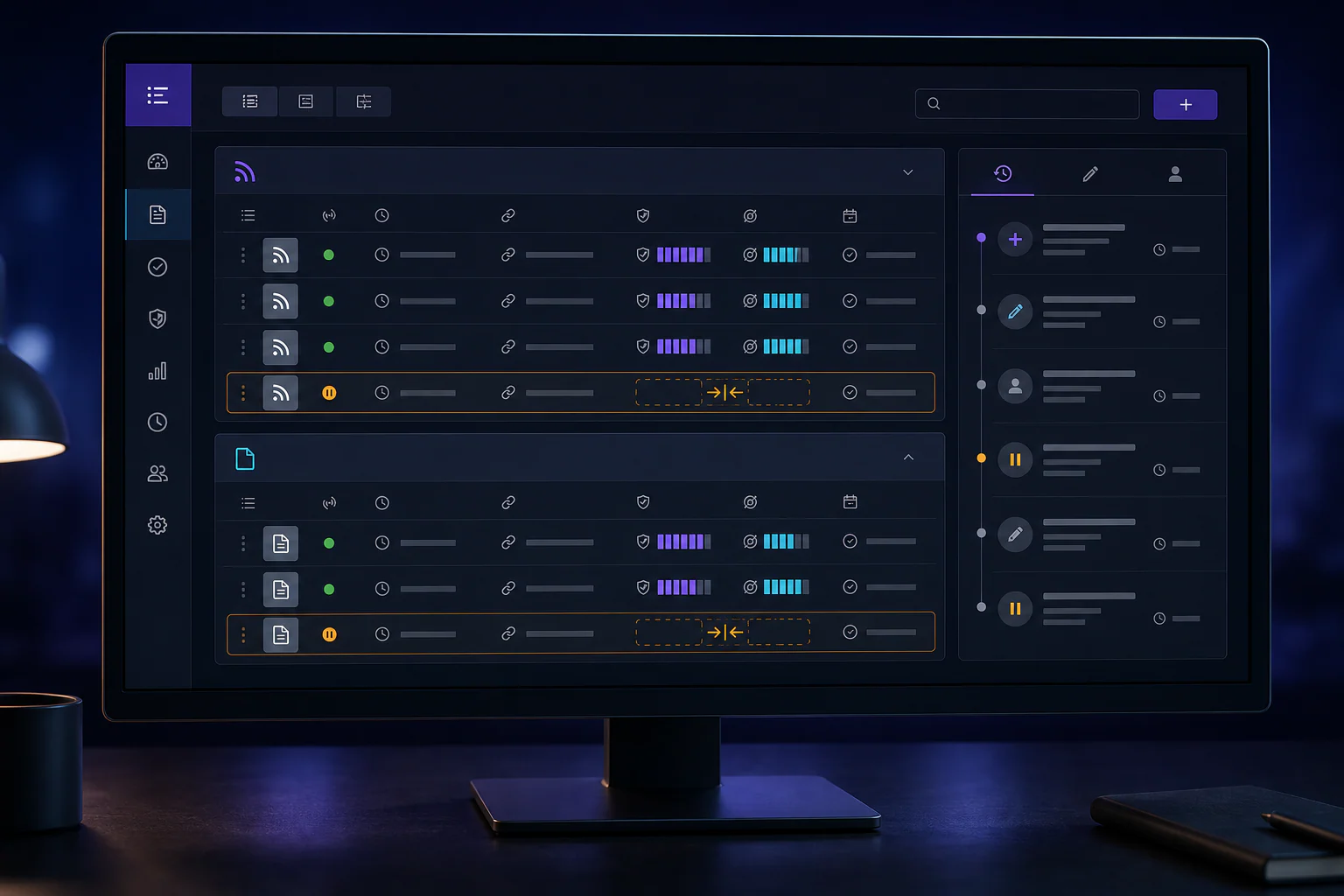
TEMIRIN supports individual RSS and HTTPS web sources configured inside a workspace. Each source should have a clear name, URL, enabled state, owner, category or tags, refresh entitlement, and a reason it belongs in the research process. That record is more useful than an anonymous bookmark because teammates can see who is responsible when the feed changes or stops working.
Source-list governance begins with the configured inventory. Users choose each source, record its purpose and owner, and remain responsible for whether it fits their research workflow. Keep canonical identity, ingestion state, and any supported explicit market link visible so another reviewer can understand the coverage.
An ingested evidence record should retain the source identity, canonical URL, observation time, available publication time, and safe source metadata. Reviewers need those fields to distinguish an original page from a repost and a current update from an old item resurfacing through a feed.
Source tier, reliability, relevance, direction, freshness, tags, and an explicit market identifier can feed the deterministic evidence brief. None of those fields certifies truth. A primary source can be stale or irrelevant to the exact resolution condition, so the underlying URL and timestamps must remain available for human review.
Tracking parameters, alternate feed URLs, and repeated items can make one update appear several times. TEMIRIN canonicalizes common URL variants and deduplicates stored content while retaining enough provenance to explain what was accepted or skipped. A duplicate is an ingestion state, not a second independent confirmation.
Review duplicate behavior after URL changes or publisher migrations. If two genuinely different documents collapse incorrectly, correct the source configuration and preserve the audit context. If repeated copies remain, inspect the canonical URLs, redirects, and stored content fingerprints used by deduplication.
Evidence appears beside a market when a supported market identifier is explicitly supplied through the configured tag, URL, or query path. Without that identifier, the item remains useful source evidence with an honest unlinked state. The configured watchlist defines the workspace’s market coverage.
When an incorrect identifier is supplied, fix the configuration and retain the original evidence record. This keeps the relationship traceable to a specific workspace setting. Reviewers should still read the market wording and resolution source before relying on the link.
Source health should distinguish successful ingestion, no new item, fetch failure, parse failure, stale state, and disabled configuration. The ingestion ledger gives a workspace a durable operational record without copying credentials into diagnostics. Fix a broken URL or access problem rather than treating an empty result as successful evidence collection.
At a regular review, sample enabled sources, failures, duplicates, accepted evidence, and unlinked items. Remove or disable a source that no longer has a clear role, but keep its historical evidence and change record. Record the owner, reason, and effective time for material edits so later research does not silently inherit a different source definition.
The practical outcome is a smaller, understandable source list whose configuration, ingestion state, evidence provenance, failures, and ownership can be audited.
Run a quarterly source-list exercise with a small, representative sample. Verify that each enabled RSS or HTTPS web source has an owner, canonical URL, clear category or tags, expected refresh entitlement, recent ingestion state, and a documented reason for inclusion. Inspect one duplicate, one failed fetch, one unlinked evidence item, and one explicit market-ID link. Disable an obsolete test source and confirm that its earlier evidence remains traceable. The purpose is to keep configured sources healthy, understandable, and accountable to the people who use them.
Assign an owner to every enabled source and record the reason when its URL, category, cadence, or status changes. A short monthly sample of successful items, duplicates, failures, and unlinked evidence is enough to reveal abandoned feeds and confusing provenance before they weaken the research workflow.
Record the canonical URL, source type, owner, purpose, tags, enabled state, expected refresh entitlement, and recent ingestion health so another reviewer can understand why the source is present.
Inspect ingestion history, fetch failures, observation times, canonical identity, and deduplication state. A duplicate should retain traceable provenance while avoiding a second evidence record for the same item.
Earlier evidence should remain traceable with its source identity and timestamps. Disabling a source changes current ingestion state; it should not erase the research record or its explicit watchlist links.

