Manually review already-configured watchlist markets after a breaking event using explicit market IDs, resolution rules, trigger and current prices, spread, depth, and notes.
August 3, 2026 · 4 min read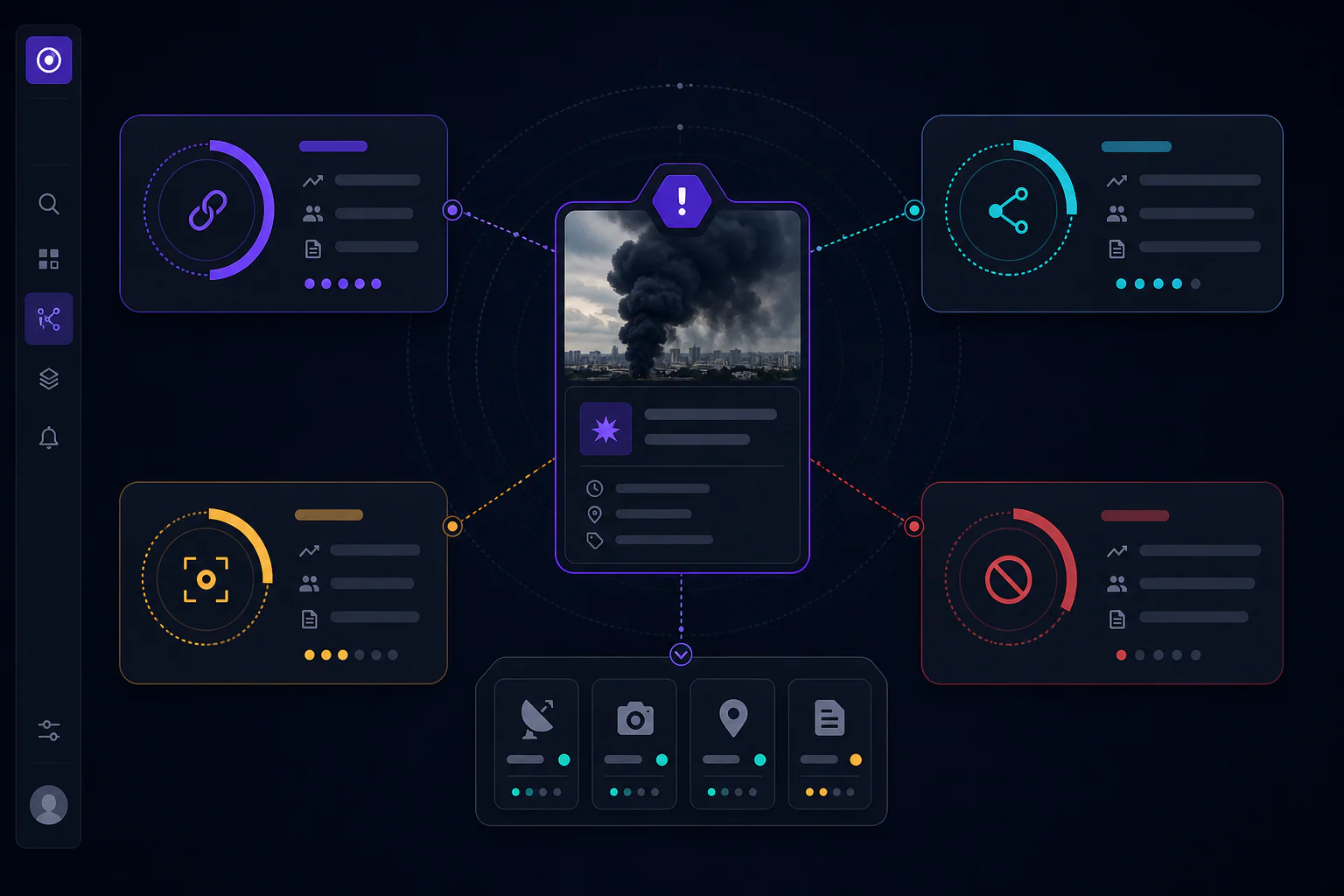
A breaking event can change how a user thinks about several markets. Start with the markets already configured in the workspace watchlist, keep that bounded scope visible, and review them one by one.
Keep the watchlist scope visible. If a relevant market is absent, the user can add it deliberately through the normal watchlist path and verify its exact identity and resolution rules.
Compare the event with the market question, close time, resolution source, exclusions, and clarification text. A dramatic headline may still be irrelevant to the formal condition. Record the reviewer’s interpretation rather than presenting it as a system-generated match.
Evidence appears beside a market only when a supported explicit market identifier was supplied. If the source has no identifier, keep it as unlinked evidence and let the user open it separately.
The preserved trigger price records the first market price saved for the watchlist-derived opportunity. The current price shows a later observation. Display both timestamps so the user can see whether the market moved while the event was being reviewed.
Spread and visible depth are timestamped, read-only public market context that helps the reviewer understand the book beside a separately labeled paper decision.
The reviewer can save a note, watch the configured market, reject the idea, record an in-app approval, or create a separate paper order. Each action has its own explicit state, actor, and timestamp.
The in-app decision endpoint enforces the configured price-move guard. Evidence changes should prompt a fresh human review; Users initiate any evidence-driven fresh review manually.
Sample several breaking events and confirm which configured markets were reviewed, which explicit evidence links were present, what prices were observed, and what note was saved. Keep events with no relevant watchlist market as unlinked evidence rather than forcing a relationship.
This routine supports disciplined response by keeping the configured watchlist, explicit evidence links, timestamped market context, and reviewer note together. Users retain responsibility for every real venue decision.
Update public copy when the implemented watchlist or evidence paths change. A current-only article should always let a reader distinguish manual coverage from product automation.
Prepare a short manual worksheet before fast events. List the configured watchlist markets likely to deserve attention, their explicit IDs, exact resolution sources, close times, and the primary pages the reviewer expects to consult. This preparation does not assert that the event will matter to every listed market. It gives the reviewer a bounded set of known questions and makes it easier to notice when the headline and formal condition diverge. Store the worksheet as an attributable human note beside the configured market records.
During the review, use one row per market and record yes/no outcome identity, source URL, observed event time, trigger and current prices, spread and visible depth when available, and the reviewer disposition. If the event is irrelevant, keep the rejection reason; if evidence is unlinked, keep it unlinked. Afterward, compare only the records that actually existed at the time. This avoids hindsight and shows whether the manual watchlist was understandable without claiming complete market coverage.
If several reviewers examine the same event, keep their notes attributable and avoid collapsing disagreement into a system confidence update. Compare the explicit markets each person reviewed, the source timestamps they saw, and the price observations available at that moment. A later resolution can inform process review, but it should not rewrite the original manual reasoning or the watchlist scope recorded at the time.
Before ending the session, record which configured markets were inspected, which evidence links were opened, the latest price timestamps, and any unresolved question. Assign an owner to each follow-up and have the next reviewer reopen the canonical records instead of relying on the handoff summary alone. This keeps a fast event review bounded, reproducible, and useful to the next person.
Begin with markets already present in the configured watchlist and verify each market identifier, outcome wording, status, and resolution rules before comparing any price movement.
Review trigger and current prices, observation times, spread, visible depth, market status, resolution wording, explicit evidence links, and the reviewer note for each configured market.
A user adds the market explicitly to the configured watchlist and verifies its identity and rules. Stored evidence should be attached only through a supported explicit market identifier.

