Configure outbound webhook alert delivery with a workspace destination, delivery attempts, retry history, safe diagnostics, and a link to the authenticated review.
August 3, 2026 · 3 min read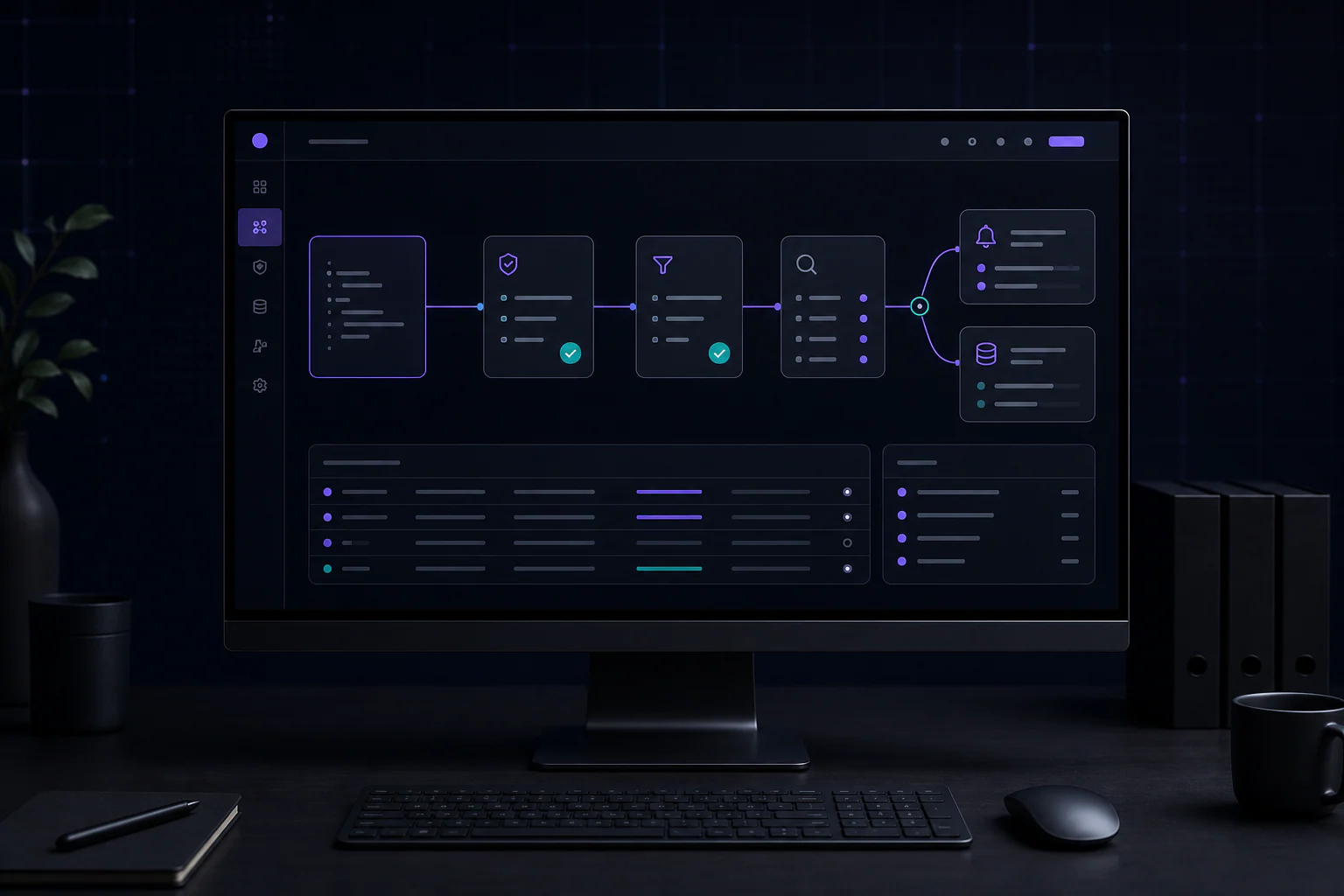
TEMIRIN can deliver an eligible alert to a provider-configured webhook destination when the deployment and workspace settings are present. The webhook is an outbound notification route. The configured destination receives outbound alert events and records each delivery attempt.
Keep the destination encrypted and server-side. Public copy should say provider setup required and should never imply that a URL pasted into a browser becomes a trusted source or an approval surface.
The in-app alert event and external delivery attempt are different records. An attempt can be pending, accepted, retryable, failed, or blocked without changing the opportunity or approval state.
Persist channel, destination reference, attempt time, status, retry timing, and safe failure context. Do not store secret headers, tokens, full sensitive payloads, or raw provider credentials in the audit view.
Network timeouts, rate limits, and selected provider errors may be retryable under bounded rules. Invalid configuration or a permanently rejected destination should remain visibly blocked until the user corrects it.
A retry creates another traceable attempt; it does not create another opportunity, evidence record, approval, or paper order. Use idempotent event identity so operational recovery cannot multiply product state.
The payload should contain only the safe context needed to recognize the alert and a link to the authenticated workspace record. The authenticated workspace record retains reviewer identity, policy, notes, and decision status.
Approve or reject remains an in-app action. Webhook response status is stored as transport progress beside the authenticated review link.
Test a valid destination, missing destination, revoked credential, timeout, rate limit, permanent rejection, and manual retry. Confirm that every state appears in the delivery ledger without exposing secrets.
After recovery, verify that eligible attempts were retried once, in-app state remained unchanged, and no duplicate alert was presented as a new decision. Record the destination owner and configuration review date.
The current value is auditable outbound delivery. Each alert event retains its destination, attempt history, safe provider result, retry state, and route back to the authenticated workspace record.
Define the outbound contract with a small stable schema and document which fields are optional. Version material changes prospectively so a receiving system can reject an unknown payload safely rather than misread it. Keep the event ID stable across retries and use a new attempt ID for each transport operation. This lets support distinguish one alert delivered several times from several alerts that happen to describe the same market.
Review destination access as part of workspace offboarding. Revoke obsolete secrets, remove unused endpoints, rotate credentials through the supported server-side path, and send a test after a material change. A successful test should create a delivery attempt only; it should not manufacture a review decision. If the destination exposes data to a broader audience than intended, disable it and inspect recent attempts before restoring delivery.
Measure delivery quality with transport metrics such as attempts, success or failure status, retry age, and recurring provider errors. Do not turn a webhook response into an outcome score or claim that faster transport improved investment results. The ledger exists to make notification operations reviewable and recoverable.
Keep a destination inventory with workspace owner, endpoint label, enabled state, last test time, and credential-rotation date. Do not expose the secret or full endpoint in user-facing logs. This inventory helps teams remove forgotten routes and investigate repeated failures while keeping webhook delivery in the outbound alert ledger.
After each provider or schema change, repeat one success case and one permanent-failure case. Confirm that the authenticated review link still resolves to the intended workspace, the external response remains transport-only, and manual retry history stays attached to the original event.
Choose a workspace destination, define the supported alert events, keep the destination credential protected, and send only the context required to route a reviewer back to the authenticated record.
Retain the alert identifier, destination, attempt time, status, safe provider result, retry state, and link to the source review. Sensitive credential values should never appear in diagnostics.
No. The webhook is an outbound transport record. Approve or reject remains in the authenticated app, where the review context, price-move check, actor, timestamp, and audit history are stored.

