Read Polymarket order-book bids, asks, spread, visible depth, outcome identity, and freshness without confusing public market data with an order instruction.
August 3, 2026 · 5 min read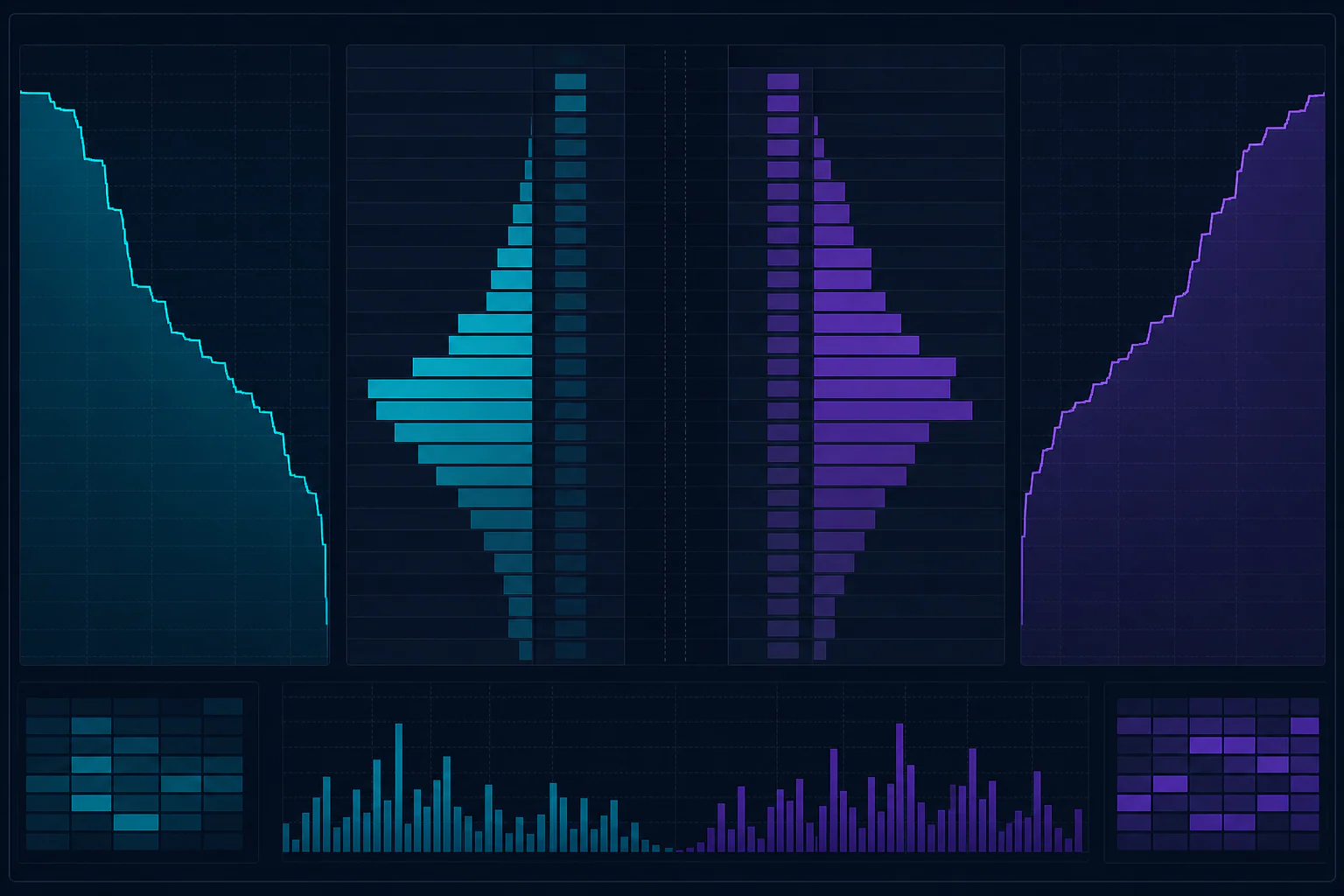
A Polymarket order book lists visible bids and asks for a specific outcome token. The highest bid shows the best displayed price a seller could currently meet, while the lowest ask shows the best displayed price a buyer could currently meet. The gap between them is the spread. The observed levels and their timestamp provide public market context for a research review.
Always confirm the market, outcome, token identity, and observation time before interpreting the ladder. A YES and NO token can have different books, and a market title alone may not identify which side is on screen. TEMIRIN can display public market and order-book context without a private key; the user remains responsible for reading the venue and making any venue decision.
The spread is the difference between the best displayed bid and ask. A narrow spread can indicate that buyers and sellers are quoting close together, while a wide spread can make a midpoint look more precise than the available prices justify. The last trade may sit outside the current best levels, so it should not silently replace the side-specific quote relevant to a review.
Record the raw bid, ask, spread, and timestamp rather than only a derived midpoint. This preserves the evidence needed to explain a later paper-order assumption. If one side is empty, label the market as one-sided or unavailable for the intended comparison instead of inventing a symmetric price.
Depth describes how much displayed size exists across price levels. The best ask may support only a small quantity; a larger hypothetical order would consume several levels and produce a different weighted price. For that reason, liquidity cannot be summarized by one headline dollar value. A useful review pairs the intended paper notional with the levels that would be relevant to it.
Visible depth is not a guarantee that every quote will remain or fill. Orders can be changed, cancelled, or consumed between observations. Use the ladder to understand current structure and to document paper assumptions, not to promise a later fill. Thin depth, abrupt gaps, and heavy dependence on one level are reasons to mark the review as fragile.
A plausible-looking book can still be stale. Cached responses, a disconnected stream, mismatched identifiers, or delayed provider data can leave numbers on screen after they stop representing the latest public state. A research view should show its source and observation time and distinguish current data from last-known context. Missing freshness evidence is a reason to stop a sensitive comparison.
Compare the order-book timestamp with the current market record and any first-recorded trigger price. If their clocks differ materially, do not combine them as if they were one snapshot. Refresh the public data, retain the original trigger record, and document which price convention the paper review uses.
TEMIRIN preserves the first market price recorded for a watchlist-derived opportunity and compares it with a later current price. That delta shows how the displayed market moved during review. It does not prove that the source caused the move, that the earlier price was executable for a chosen size, or that a user could have captured the difference.
Use the public order book to add spread and depth context to the comparison. A large movement in a thin, wide market needs different interpretation from the same movement in a deeper, tighter book. Keep source evidence, market wording, price points, and uncertainty visible rather than collapsing them into an opaque score.
A paper order is the appropriate place to record a simulated side, notional, assumed price, and risk review. TEMIRIN persists the record and applies per-order, rolling twenty-four-hour, market-exposure, and portfolio-concentration checks. The order remains explicitly paper only and does not become a venue instruction because the order book appears favorable.
Later mark-to-market review should retain the price convention used at entry. If the paper order used the best ask, a weighted depth price, or another documented assumption, keep that method beside the result. Changing the convention after seeing the outcome creates hindsight rather than analysis.
Before relying on a snapshot, verify market status, outcome identity, token identity, bid, ask, spread, visible depth, observation time, and the intended paper size. Then inspect resolution wording, source evidence, public-wallet exposure, and the applicable paper-order limits. These checks answer different questions and should remain visible as separate inputs.
TEMIRIN supports this read-only research and paper-review loop with public market data, watchlist-derived opportunity records, trigger-price memory, portfolio context, and a paper-order ledger. This paper loop does not request a private key or place a real order. Controlled LIVE is a separate, non-custodial path that is available only to eligible users after exact-order review, provider-required signed authorization, and a fresh fail-closed eligibility check.
Confirm the market and outcome identity, then compare the freshest visible bid and ask with the snapshot timestamp. A spread without the correct outcome or a recent observation can misstate the market context.
Visible levels are a read-only snapshot that can change before a user acts elsewhere. TEMIRIN keeps depth and quote freshness as research evidence rather than presenting either one as an order instruction or fill promise.
Store the observed bid, ask, spread, visible depth, outcome identity, and observation time beside the evidence and reviewer note. That preserves what the reviewer could inspect when the paper decision was saved.

