Choose source refresh intervals by event speed, source reliability, alert value, and plan capacity while keeping publication, observation, and review times distinct.
August 3, 2026 · 4 min read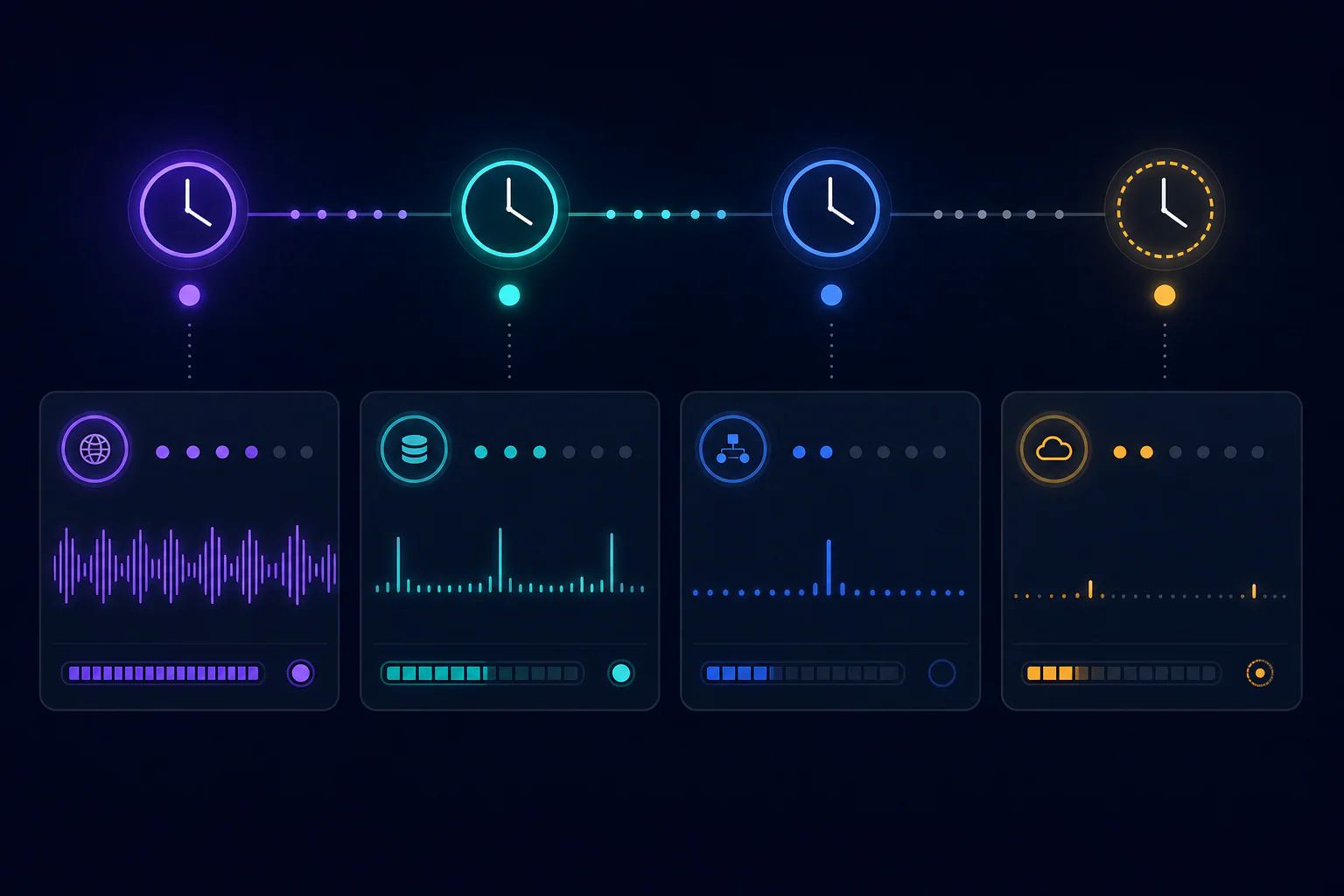
A source can be newly ingested without containing new information. Useful freshness tracking separates when the publisher released an item, when TEMIRIN observed it, when parsing completed, when a watchlist-derived record was created, and when a user reviewed it. Collapsing those moments into one updated label makes it impossible to distinguish a slow source from a delayed polling cycle or an unattended queue.
The age that matters also depends on the claim. A scheduled economic release can affect prices in seconds. A regulatory consultation may develop over weeks. An official resolution page can remain unchanged for months and then become decisive. Display both source age and workflow latency so the reviewer can judge whether the evidence is timely for this market instead of relying on a universal fresh-or-stale badge.
Faster polling is useful only when the source changes often enough and the opportunity window is short enough to justify it. An official live-results page may deserve a rapid interval during a defined event. A weekly policy bulletin does not become more valuable when checked every fifteen seconds. Excessive polling consumes plan capacity, increases duplicate processing, and can create false urgency without improving decisions.
TEMIRIN plans express different refresh policies: Starter supports a focused stack at fifteen-minute intervals, Pro targets five minutes, Elite one minute, and Fund fifteen seconds. Those are capacity boundaries, not promises that every connector or external publisher will deliver on that clock. Server-backed connectors, rate limits, upstream reliability, and production health still matter. Design the source portfolio around the slowest acceptable decision window, not the fastest number on a pricing table.
A priority source can move higher in the polling and review order without bypassing evidence checks. Cooldowns prevent repeated versions of the same item from flooding alert channels, while material corrections or contradictions can create a new review event. Source health should report failures, parse errors, last successful check, and last meaningful change. A green connector with no recent content is different from a failing connector whose age is unknown.
Category and channel rules refine delivery. A macro source may send Telegram alerts only when a watchlist market passes confidence and liquidity thresholds; a slower web page can update the in-app record without interrupting the user. Delivery attempts need their own ledger so a notification retry does not look like another source event. These distinctions make freshness operational rather than cosmetic.
Measure source-to-record latency, trigger-to-review time, and trigger-to-open movement by source. A feed that arrives early but produces weak review context may not deserve premium capacity. Another may create few events yet consistently preserve useful price context. Compare these patterns with source attribution, missed opportunities, rejected records, and alert burden rather than celebrating raw poll frequency.
Faster monitoring cannot remove market risk or authorize venue order placement. Manual review, Telegram alerts, and paper modes never transmit by themselves. Controlled LIVE is a separate non-custodial path that remains fail-closed behind eligibility, policy, exact-order review, provider-required signed authorization, and kill-switch state. Freshness is valuable when it creates more time for a disciplined decision, not when it pressures the user to act before review.
Define an escalation path for stale high-priority sources. A missed check can first retry within the connector's safe limits, then mark the source degraded, suppress claims that its evidence is current, and notify the responsible workspace role. If the source is named in a market's resolution rule, the gap deserves special visibility near the deadline. Recovery should record the first successful check and whether any items appeared during the outage, allowing later attribution to account for the missing observation window. Test that path before a critical event.
No. It is the fastest Fund plan policy. Connector status, upstream rate limits, publisher behavior, network conditions, and system health can affect actual observation time.
No. Match interval to event speed, reliability, change frequency, alert value, and capacity. Rarely changing pages often benefit from slower checks.
Last checked confirms a monitoring attempt. Last changed identifies the most recent meaningful content update; both are needed to interpret health and freshness.

