Read current spread, visible depth, and quote freshness as timestamped research context beside a separate prediction-market paper decision.
August 3, 2026 · 3 min read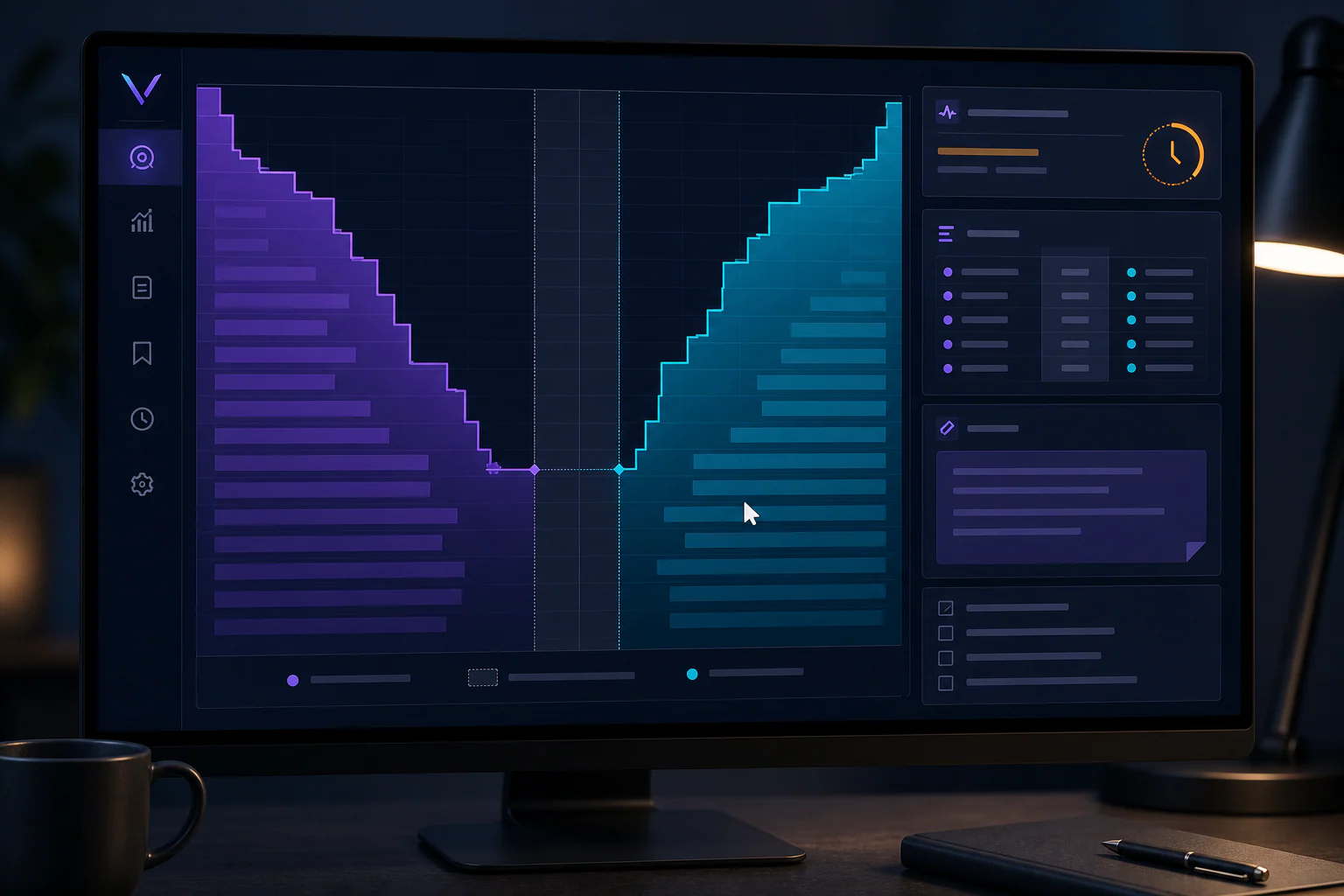
A displayed market price is one observation. Bid, ask, spread, visible depth, outcome identity, and observation time explain what the public order book looked like when a reviewer opened it. TEMIRIN presents that read-only public context beside the review record so the user can document a paper-only assumption with its own timestamp and rationale.
Start by confirming the market and outcome. A narrow spread on the wrong outcome is useless, and a midpoint can hide the fact that the best available prices differ. Save the observation time with the review note so a later reader does not mistake an old snapshot for current venue state.
Spread is the distance between the best displayed bid and ask. TEMIRIN shows the two quotes, their observation time, and the calculated gap as read-only market context for a reviewer to interpret.
Compare spread around the preserved trigger observation with the latest available book only when both timestamps are clear. A change can reflect new information, different participation, or a thin book, so the note should preserve the displayed values and the reviewer’s interpretation separately.
Visible depth shows resting quantity at displayed levels when the public endpoint supplies it. TEMIRIN records the available levels, quote age, and missing-data state so a later reviewer can understand exactly which public snapshot informed the note.
Use the ladder to ask a human question: does the market look materially thinner than the headline price suggests? Record the relevant levels and observation time in a decision note, then keep any user-entered paper assumption in its separate paper record.
The in-app approval endpoint enforces the configured price-move guard. Paper orders separately enforce plan-scoped per-order and rolling twenty-four-hour notional limits, per-market exposure, and portfolio concentration using stored context. Spread, depth, quote age, and liquidity remain visible review inputs rather than enforced gates.
An approval record is not a venue transaction, and a paper order is a simulated workspace record. Neither transmits by itself; controlled LIVE is a separate exact-order, provider-signed, fail-closed action for eligible users. This boundary should appear in article copy, interface labels, exports, and support explanations so observed book data is never confused with order authority.
A useful note includes market ID, outcome, trigger price, current price, best bid, best ask, visible depth when available, observation time, source evidence IDs, public-wallet exposure context, and the reviewer’s conclusion. Mark missing data as unavailable instead of filling the gap with an estimate.
Revisit the note later to understand what the reviewer actually saw, not to claim an executable price. If the current public book changes, create a new observation and preserve the earlier one. A reproducible history supports better research discipline while remaining honest about the difference between read-only market data and venue activity.
Sample several records periodically and trace each displayed value to the public observation that produced it. Check outcome identity, timestamp, rounding, and missing-data labels. Correct confusing presentation prospectively and preserve the old audit record. The practical value is clearer evidence and price context preserved for a human review.
For an operating check, open several markets with different spreads and visible depth, then verify that every card uses the same read-only labels, timestamps, and unavailable-data treatment. Save a human note explaining which levels the reviewer observed and compare it with the preserved trigger and current prices. The exercise can end in research, an in-app decision record, or a separately created paper order, with public market observations and paper assumptions kept in their own fields. Repeat the sample after order-book display changes so product copy and interface labels stay aligned.
Spread shows the gap between the visible bid and ask, depth shows displayed quantity near selected levels, and freshness shows when the snapshot was observed. The three fields answer different research questions and belong together.
Treat visible depth as timestamped public market context. Record the displayed levels and quote age, then keep any paper assumption and policy result in the separate paper ledger.
Treat thin visible depth as a reason to inspect the market more carefully, preserve the observation, and apply configured paper limits. It is not a promise that a particular notional could be transacted at the displayed level.

